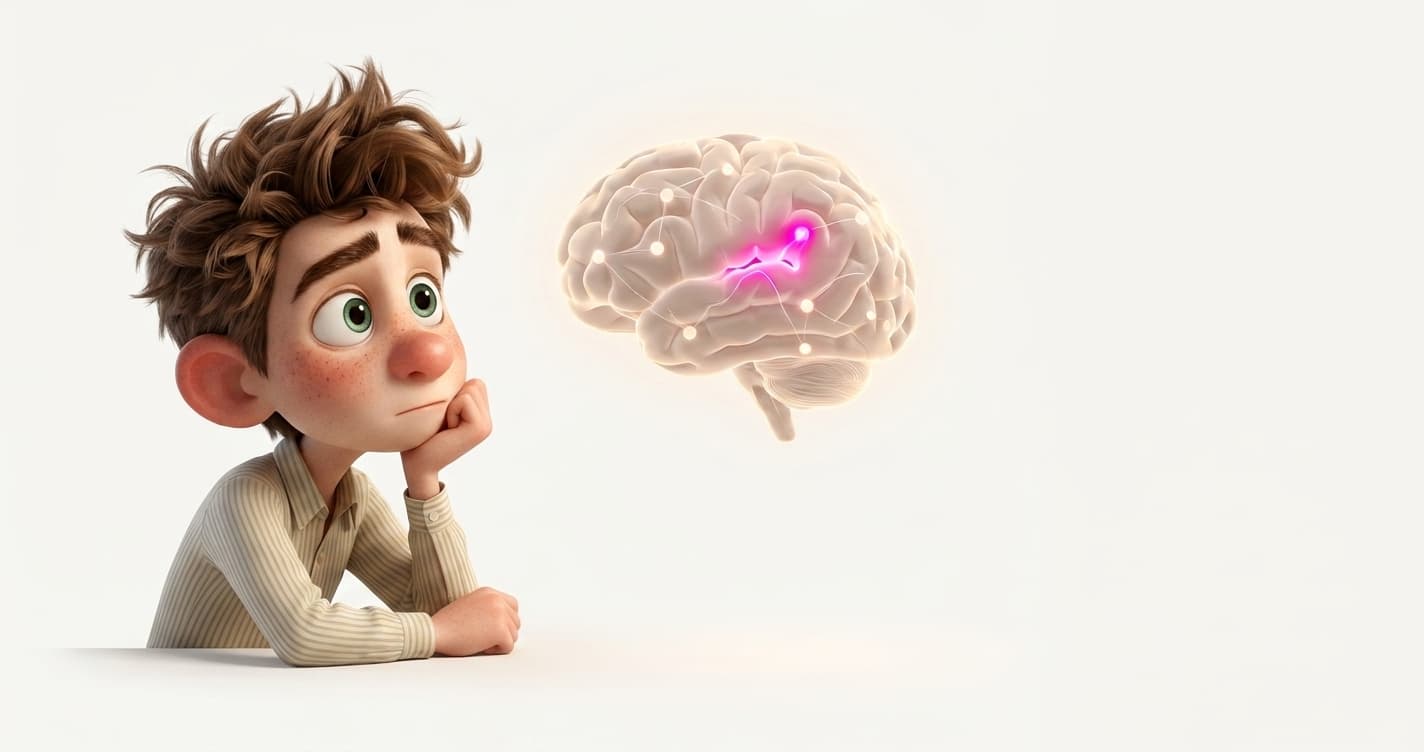
Your customer's brain is not a "buy button".
There is no magic word that releases dopamine and makes someone purchase. Nor can a copywriter reliably "activate the reptilian brain" with a clever headline. Human decision-making is more complex.
Neuroscience can still improve your copy. Its value lies in understanding how people allocate attention, process information, remember ideas and evaluate choices. Applied responsibly, these six principles can make copy clearer, more memorable and easier to act on.
01. Reduce the mental work.
Every sentence asks the reader to spend mental energy. Long sentences, jargon and competing ideas increase that demand. Because working memory is limited, readers may struggle to evaluate an offer while also decoding its language.
Do not make people solve your copy. Give each section one purpose, lead with the main benefit and remove details that do not help the decision.
Before: Our integrated solution facilitates the optimisation of cross-functional workflows.
After: Plan, assign and track your team's work in one place.
Clarity is not about making an idea less intelligent. It keeps the reader's attention on its value.
02. Turn abstractions into mental pictures.
Abstract claims such as "improve efficiency" give the reader little to picture or assess. Concrete language describes observable actions, situations and outcomes.
When you encounter words such as innovation, transformation or empowerment, ask what the customer would actually see, do or experience if the claim were true.
Before: Improve your team's operational efficiency.
After: Finish Friday's reporting before lunch.
Specificity gives the mind something to represent—and the buyer something to evaluate.
03. Use stories to organise information.
Stories connect events through cause and effect: someone wants something, a problem intervenes, a solution changes the situation.
Research into narrative transportation suggests that people can become cognitively and emotionally immersed in stories. However, there is no universal storytelling formula that guarantees persuasion.
Use compact customer stories, then support them with evidence.
Before: Our reporting software saves time.
After: Maya once spent every Monday combining four spreadsheets. Now she reviews one finished report over her first coffee.
The story creates relevance; a demonstration, testimonial or measured result creates confidence.
04. Frame the offer around the customer's situation.
People evaluate outcomes against a reference point: what they have, expect or risk losing. Consequently, equivalent descriptions can produce different reactions.
This does not mean losses always outweigh gains. Choose the frame that honestly reflects the customer's circumstances rather than manufacturing fear.
Before: Our automation software increases productivity.
After: Stop losing five hours each week to manual reporting.
Use loss framing when customers already recognise a costly problem. Use gain framing when progress or possibility is more relevant.
05. Connect functional benefits with emotional meaning.
Decisions are not divided neatly between logic and emotion. The two interact throughout evaluation and choice.
Benefits matter partly because of the feelings they represent. Saving time may mean relief; visibility may create confidence; simplicity can restore a sense of control.
Before: Receive real-time project notifications.
After: See problems while there is still time to fix them.
Follow emotional relevance with specifics. Explain which alerts users receive and what they can do next. Emotion should invite attention, not replace substantiation.
06. Make the next action unmistakable.
A reader can understand and want an offer yet still hesitate because the next step feels uncertain or demanding.
A useful call to action explains what the person is doing, what they will receive and, where necessary, what happens next.
Before: Submit.
After: Create your free workspace.
A short reassurance—such as "No credit card required"—can reduce uncertainty, provided it is accurate. The aim is not pressure. It is to remove avoidable friction between intention and action.
Neuroscience should not be used to make manipulation sound scientific. Its practical lesson is simpler: attention is limited, mental effort matters, emotion shapes evaluation and context influences choice.
The best neuroscience-informed copy helps people notice relevant information, understand it and decide with confidence.
That is good communication, not mind control.
Karbon Copy is a bilingual copywriting and communications agency in Hong Kong. We write for how the mind actually reads, remembers and decides. Start a conversation on WhatsApp at +852 9854 1689.